
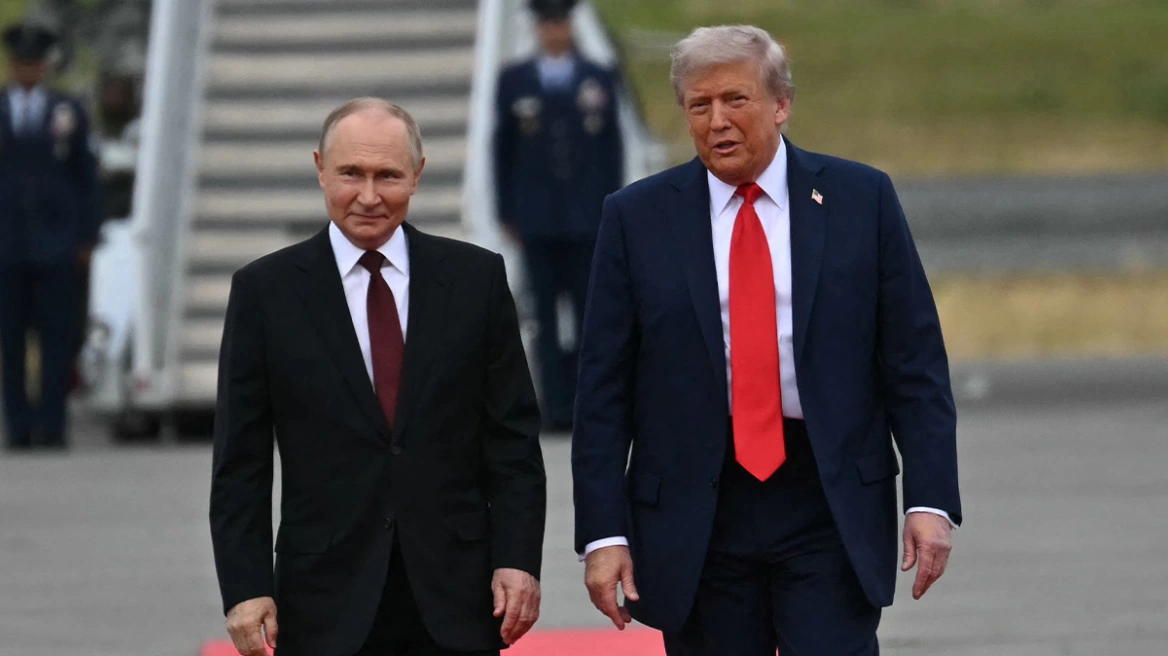
The partial lifting of US sanctions, the surprise announcement of an energy ceasefire, and the threat to limit military aid are shaping a new framework in relations between Washington, Moscow, and Kyiv.
Newsroom | 12.10.2026 World
Donald Trump’s decision to once again allow the import of Russian diesel into the United States is evolving into a much broader diplomatic and political confrontation, centered not only on economic sanctions against Moscow but also on Ukraine’s ability to continue striking Russian energy infrastructure. In less than 72 hours, the US president announced a deal with Vladimir Putin for the supply of millions of tons of Russian diesel to international markets, attacked Volodymyr Zelensky once again, and, on the evening of Sunday, October 11, claimed that Russia and Ukraine had agreed to an immediate halt to attacks on energy facilities. That announcement was not accompanied by any corresponding confirmation from Moscow or Kyiv, while Russian bombardments of Ukrainian infrastructure continued.
The Diesel Deal and the First Easing of Sanctions
The sequence began on Friday, October 9, when Donald Trump announced he had reached an agreement with Vladimir Putin to channel additional quantities of Russian diesel to international markets. According to US announcements, Moscow committed to immediately supplying more than 300,000 tons, another 500,000 tons in November, and one million tons in December. The US president also referred to the prospect of supplying an additional three million tons at a later stage, provided certain conditions are met. These are total commitments exceeding 4.8 million tons, although the delivery schedules, commercial terms, and final buyers have not been fully disclosed.
On the same day, the US Treasury Department issued the special General License 135 through the Office of Foreign Assets Control (OFAC). The decision permits specific transactions involving the sale, transfer, unloading, and import of diesel of Russian origin, including its import into the United States. The license is valid until April 7, 2027, and does not abolish the overall US sanctions regime against the Russian energy sector.
The development carries particular political weight, as the United States had banned imports of Russian energy products since 2022, following the start of the full-scale invasion of Ukraine. More than four years later, Washington is creating a temporary exemption that allows Moscow to return, under conditions, to the American fuel market.
Oil Prices and the Real Impact
The announcement triggered an immediate reaction in refined fuel markets, with the largest losses recorded in diesel contracts. In the United States, ultra-low sulfur diesel (ULSD) contracts fell by about 4.1%, while in the European market, gasoil contracts recorded a drop of approximately 4.7%.
The picture was different in crude oil. Brent closed Friday’s session at $104.72 per barrel, up 0.42%, while US WTI closed at $91.85, up 0.39%. The distinction between the two markets is essential: the deal does not provide for an increase in Russian crude oil production but rather the supply of larger quantities of already refined fuel.
There are, however, serious doubts about the actual scale of the relief. According to analyses by the Financial Times and The Guardian, even the full implementation of the initial Russian commitments is not enough to reverse the global fuel shortage. The quantities represent a small percentage of international demand, and their transport could take up to three weeks. Moreover, Russian production itself is facing problems due to Ukrainian strikes on refineries and storage facilities.
The Pressure on Zelensky and the Uncertain Ceasefire
Almost simultaneously with the energy deal, American pressure on Ukraine shifted to the military field. Donald Trump reiterated his opposition to Ukrainian attacks on Russian refineries, linking the damage they cause to fuel production with rising international prices. According to Reuters reports, the Ukrainian side has even been told that military support and intelligence sharing could be limited if attacks on Russian energy facilities continue.
The climax came on Sunday, October 11, when Trump announced via social media that there was an immediate energy ceasefire between Russia and Ukraine. The US president presented the halt to attacks as agreed and already in effect. The announcement raised questions, as there had been no prior joint diplomatic statement and the terms of the alleged agreement had not been made public. Volodymyr Zelensky appeared not to have been informed of any final agreement, making clear that Ukraine is willing to stop attacks on Russian energy facilities if Moscow does the same. At the same time, Ukrainian authorities reported new Russian attacks, including in Kharkiv.
Reactions and the Next Step
The decision on Russian diesel also triggered reactions within the United States. A group of senators from both parties called for a review of the agreement, arguing that easing sanctions could provide additional revenue to Russia. The European stance is different, as the European Union continues to apply restrictions on imports of Russian oil.
Russia finds itself in a particularly favorable diplomatic situation, as US energy needs give Moscow the opportunity to bring economic sanctions issues back to the negotiating table. There is, however, insufficient public evidence to prove that the diesel deal includes specific military or territorial concessions.
The question is not only whether additional quantities of Russian diesel will manage to lower international prices. It is whether the effort to address the energy crisis will gradually lead to a broader readjustment of American policy toward Russia and Ukraine. For now, Moscow has secured a specific economic exemption from the sanctions regime, Kyiv is being asked to consider new restrictions on its military operations, and the White House is seeking immediate results before the November 3 ballot. The energy deal is already a reality. The ceasefire announced by Trump remains pending.