

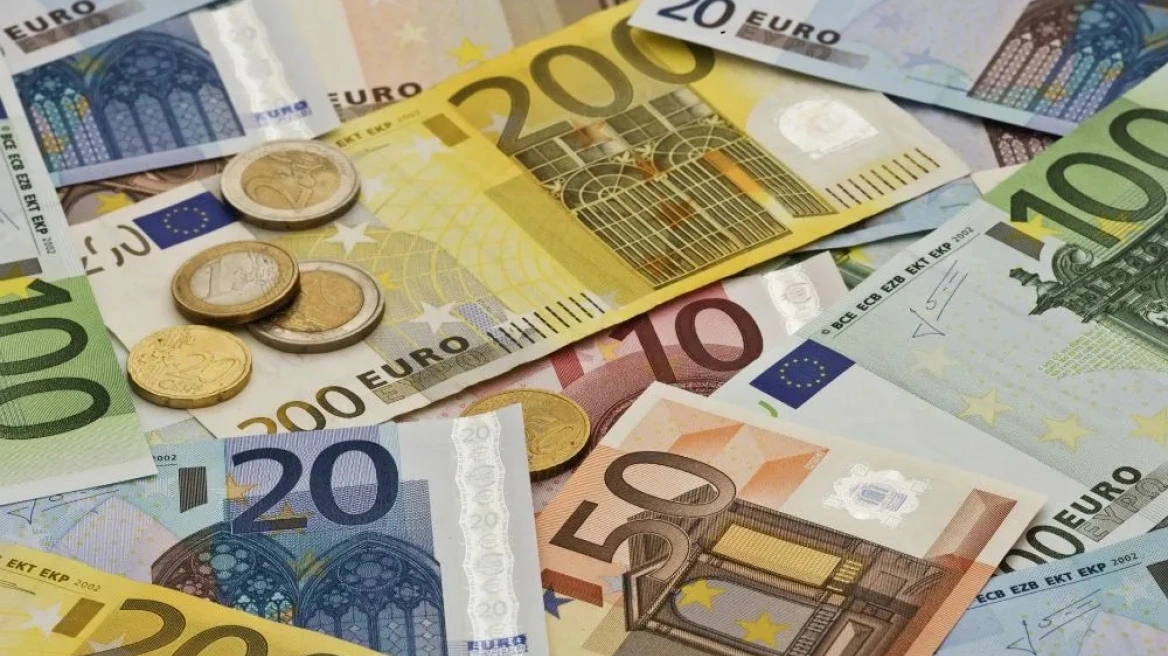
The single currency fell to $1.1161 in Asian trading, its weakest since May 2025, as hedge funds dumped euros and the spread between French and German bonds hit levels not seen since 2011. With Spain’s Sánchez government reeling from a parliamentary defeat and Macron’s succession battle already turning toxic, investors are pricing in a Europe where political risk is no longer an exception — it’s the baseline.
Giorgos Petridis | 05.10.2026 Economy
The euro touched $1.1161 in Asian trading on Monday, its lowest level in seventeen months, as a confluence of political and fiscal shocks from Paris and Madrid sent investors running for the exits. The single currency fell as much as 0.8%, with hedge funds in Asia leading the selling in the spot market, triggering option-related flows that accelerated the decline.
The immediate trigger was a report that Spanish government and Socialist Party officials are preparing for an early general election, following Prime Minister Pedro Sánchez’s heavy parliamentary defeat last week. Three sources close to Sánchez, speaking on condition of anonymity, said the snap election scenario is gaining traction within the government and party apparatus.
But the deeper wound is France. On Friday, the premium investors demand to hold French government bonds over equivalent German bunds reached levels not seen since 2011 — the height of the eurozone debt crisis. The yield on the 10-year French bond rose to 4.94%, while the German equivalent fell to 3.42%, widening the spread to 152 basis points.
Homin Lee, senior macro strategist at Lombard Odier in Singapore, said the signals from both bond and currency markets are unmistakable: investors are pricing in growing instability in the French government and the erosion of the country’s fiscal credibility ahead of the 2027 presidential election.
The political backdrop in France offers little comfort. Opposition parties have shown scant willingness to compromise with the outgoing government of Emmanuel Macron, and a poll published last week projected that Marine Le Pen of the far-right and Jean-Luc Mélenchon of the far-left would both advance to the second round of the presidential race. The scenario of a Le Pen–Mélenchon runoff — once dismissed as a fringe possibility — is now being treated by markets as a realistic risk to French fiscal policy.
JPMorgan strategists, including Mira Chandan, warned on Friday that the euro has not yet fully priced in the stress in the French bond market and remains vulnerable to further sell-offs, particularly against the Swiss franc and the yen.
The inflation trap
The political turmoil is unfolding against a backdrop of stubbornly high inflation. Eurozone annual inflation accelerated to 3.8% in September, up from 3.2% in August and well above the ECB’s 2% target, driven largely by an 18.8% surge in energy prices amid continued fighting in the Middle East. Core inflation, excluding energy and food, rose to 2.5%.
The inflation spike has put the ECB in an uncomfortable position. Markets now assign only an 18% probability to a rate hike at the October 29 meeting, down from over 60% just two weeks ago, according to the ECB Watch Tool. The shift reflects a growing consensus that the bond market has already done much of the tightening for the central bank — long-term yields have surged, raising borrowing costs for governments, businesses and households without the ECB lifting a finger.
Isabel Schnabel, the ECB board member who until recently was among the loudest voices calling for further hikes, has conspicuously avoided committing to an October move, signaling that even the hawks are now waiting to assess the energy shock and its broader economic impact.
The euro’s slide is not merely a currency story. It is a verdict on a continent where the two largest economies after Germany are both facing political rupture. Spain, which until recently was seen as a rare island of stability in Southern Europe, is now contemplating its fourth general election in less than a decade. France, the eurozone’s second-largest economy, is navigating a fiscal trajectory that its own watchdog has described as based on “optimistic” assumptions, while the political class positions itself for a succession battle that could reshape the European project.
For the ECB, the dilemma is acute. Raising rates to combat inflation would risk deepening the political crisis by increasing the cost of servicing France’s debt. Holding steady risks allowing inflation expectations to become unanchored. The central bank’s next move, whatever it is, will be read as much as a political signal as a monetary one.