
Greece invested political capital in isolating Russia and developing Alexandroupolis. What happens if Washington’s priorities shift?
Dimetres Yalourakis | 16/11/2026 | Opinion
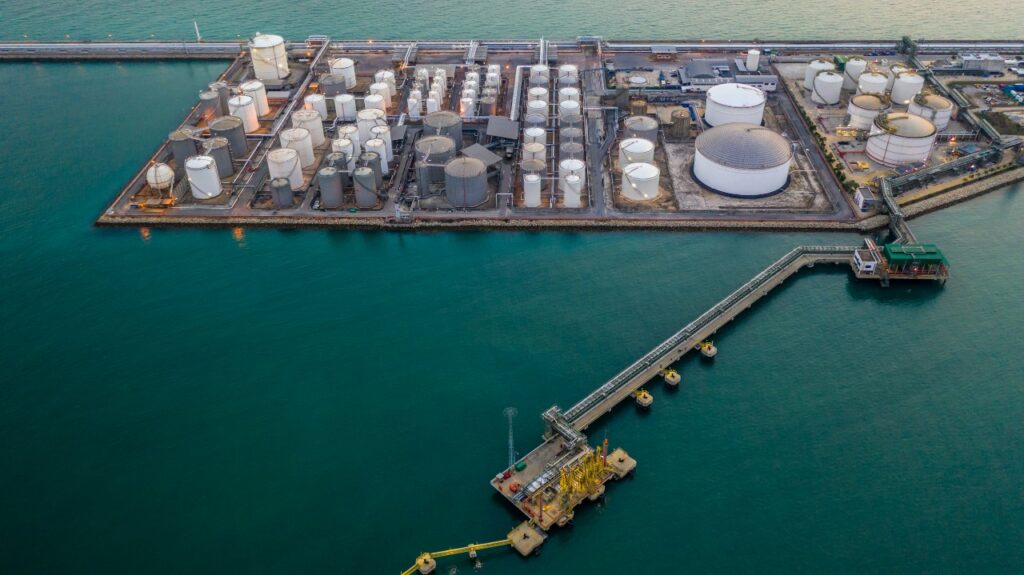
Washington can help Ukraine negotiate with Russia while talking to Moscow about a possible US stake in pipelines that could bring Russian gas back to Europe. That possibility goes to the heart of the matter. If the United States sees an advantage in doing business with Vladimir Putin on specific issues, it will pursue it. Greece, which has invested political capital in isolating Russia and developing Alexandroupolis as an energy gateway, needs to consider what it will do if Washington’s priorities shift.
The Abu Dhabi talks reopened negotiations. They produced an agreement on a prisoner exchange and raised the prospect of European participation in the next round. Volodymyr Zelensky said US negotiators had even floated the idea of Ukraine withdrawing from the Donbas in exchange for NATO membership. He said he would put the issue to a referendum only if Ukraine received a broad package of guarantees. Accelerating Ukraine’s accession to the European Union could also form part of a settlement. Full membership, however, requires unanimous approval in the EU Council and ratification of the accession treaty by all contracting states.
For Putin, even a ceasefire that froze the front line would have political value. Russia would retain control of occupied territory and could press for sanctions relief and a resumption of trade with the West. Whether that would amount to a strategic victory depends on the terms. Control on the ground gives Moscow leverage at the negotiating table. Recognition of Russian sovereignty over that territory is a separate question. And any assessment of Putin’s stated aim of stopping NATO expansion must account for what happened after the invasion. Finland and Sweden both joined the alliance.
There is already a precedent for an energy deal. In October, as the Iran crisis put pressure on fuel markets, Donald Trump announced a deal for Russian diesel and his administration temporarily eased the relevant US sanctions. Reuters also reported talks involving Jared Kushner and Kirill Dmitriev about bringing a US investor into Nord Stream. Getting Russian gas flowing to Germany again would require a policy shift in Berlin and Brussels. The EU has already enacted a phased ban on Russian gas imports. The commercial case for a deal is clear enough. The political decision is still open.
The Vertical Gas Corridor already faces a problem regardless of what Moscow does. At 2025 tariffs, transporting gas to Ukraine via the Trans-Balkan route was estimated to cost €9.65 per megawatt-hour from Greece, compared with €1.93 from Poland. Lower tariffs took effect in October, and shippers have booked 46 percent of the export capacity offered at Sidirokastro for each of the four gas years through 2029–30. Those bookings show commercial interest. How much of that capacity will translate into regular deliveries to Ukraine, and what buyers will ultimately pay, remain open questions.
Competition is also coming from the Black Sea. Romania expects first gas from Neptun Deep in the first half of 2027, with annual output estimated at around 8 billion cubic metres once production reaches its plateau. Romanian gas could generate more traffic on Balkan interconnectors while reducing demand for LNG routed through Greece. Before Athens celebrates a second floating LNG terminal at Alexandroupolis as a strategic gain, it should establish who is willing to buy, how much they will take and for how long.
The stakes also extend to peach growers in Greek Macedonia, fur businesses in Kastoria and the tourism sector. A de-escalation could reopen channels with Russia. Trade would still depend on decisions about sanctions and Russian countermeasures, as well as whether transport and payment channels can be restored. Athens needs to know what it wants from those talks when they begin. The diesel deal has already shown how quickly Washington can act when its interests shift. Greece should define its own interests before the next deal is struck.