


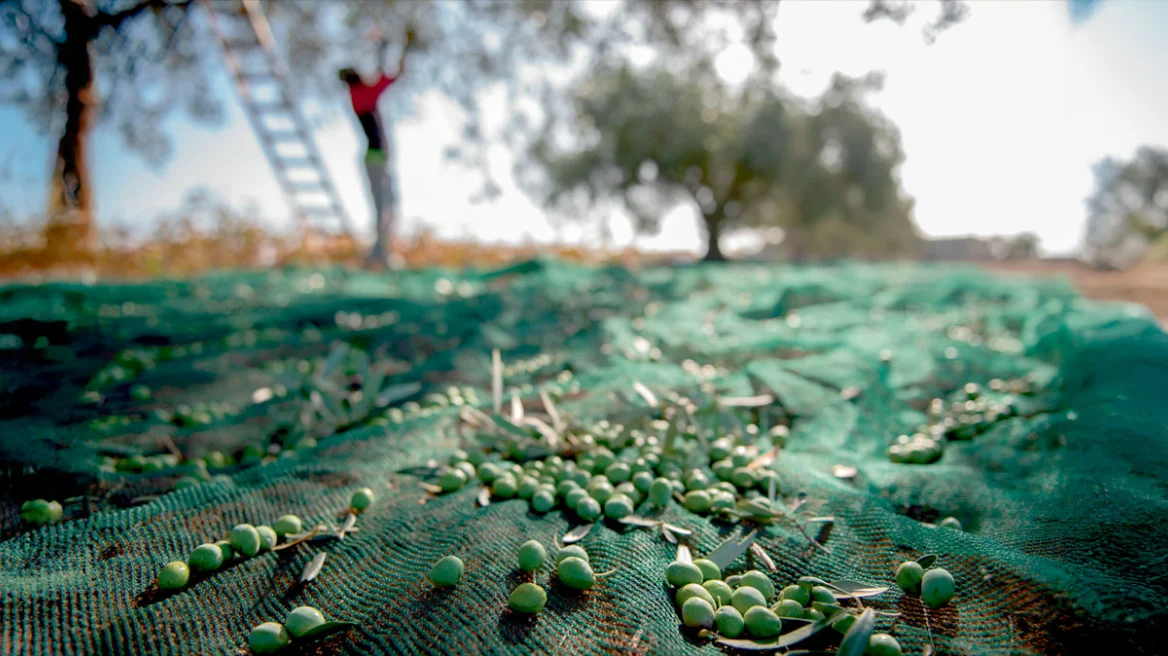
Spain’s production is expected to reach 1.6 million tons, up 23%, while Greek producers are keeping their oil in tanks, hoping for a price rebound. Producer prices have fallen below cost, to €3.3–4 per kilo, while retail shelves hold at €8.5. Tunisia is pressuring the market with cheap olive oil, and Italy is calling for crisis funds.
Giorgos Petridis | 05.10.2026 Agriculture
This year’s olive harvest season began with a picture that Mediterranean producers had not seen for years. In Spain, the world’s largest producer, the Ministry of Agriculture announced that olive oil production for the 2026/27 period is expected to reach 1,602,596 tons, an increase of 23% compared to the previous year. Andalusia, which produces nearly 79% of Spanish olive oil, is estimated to reach 1,261,200 tons, up 29% from last year.
This development has a direct impact on producer prices across the Mediterranean. In Spain, the price of extra virgin olive oil has fallen to €3.3 per kilo, the lowest level for this time of year in five years, when the season began at €5. Cooperatives and agricultural organizations in Granada are asking the government to activate the olive oil withdrawal mechanism for the first time to curb the decline.
In Greece, the picture is no different. The producer price for extra virgin olive oil ranges from €3.80 to €4.20 per kilo, with the average at around €4. The problem is that production costs have exceeded these levels. According to data presented at recent industry events, production costs in Greece are estimated at over €4.5 per kilo, with some estimates reaching €4.70. This means the producer loses about one euro for every kilo of olive oil sold.
The reaction of Greek producers is calm but strategic. As the president of the National Interprofessional Olive Oil Organization, Manolis Giannoulis, stated, “no one is in a hurry to harvest, everyone is waiting for prices to rise.” This is a waiting tactic, but it carries risks: if the pressure from Spanish production continues, prices may not recover and producers may find themselves with stock they will be forced to sell at even lower prices.
At the same time, a new player is reshaping the global market. Tunisia, according to data from the International Olive Council for the 2025/26 period, has risen to second place worldwide in production, with an estimated 450,000 tons and an increase of 32% compared to the previous year. The country is pressuring the European Union with cheap olive oil, which poses an additional threat to Greek producers. The vice president of SEVITEL, Nikos Zavakos, has highlighted the challenge of increased competition and the investments Tunisia is making in the sector.
Greece, for its part, now ranks fifth worldwide in olive oil production, behind Spain, Tunisia, Italy and Turkey, with an estimated production of 220,000 tons for the 2025/26 period. The country exports about 50,000 tons of standardized branded product, while about 150,000 tons are traded in bulk. This means that most of the added value of Greek olive oil is created outside the country, as the product is packaged by foreign companies.
On supermarket shelves, the price of olive oil has settled at €8.5 per liter, a noticeable decline from the €11.60 of January 2024. However, the decline in producer prices is not transmitted at the same speed to the consumer. The final price includes stocks from previous periods, standardization, packaging, transport and marketing. Olive oil is an internationally traded commodity, and prices in Greece are significantly influenced by production and supply conditions in the major olive-producing countries.
The coming period will show whether the waiting strategy of Greek producers will pay off or whether Spanish oversupply and competition from Tunisia will continue to push prices down. What is certain is that this year will not be easy for the sector, which must balance production costs, international prices and consumer needs.